Governorate
of Dhofar
The
Governorate of Dhofar is in the far south of the Sultanate and borders on
the Wusta Governorate the east, the Arabian Sea to the south, the Republic of
Yemen to the west and the Kingdom of Saudi Arabia to the north and
north-west.
It is not simply
a place of historical interest. All of its ten Wilayats display the clear
imprint of the Renaissance. No mountain, plain, stretch of coast or border
post, even as far as the sands of the Rub' Al Khali, has been neglected.
The outstanding feature of the development process undergone by Dhofar and
its nine Wilayats is the extent to which this process shows balance and
harmony, the extent to which it has been influenced by the demographic and
geographic realities represented in the disparity between upland and plain.
It is also distinguished by a remarkable model of
local administration, as symbolized by the
presence of the apparatus of State in even the
smallest population centre. This fact alone
reflects the leadership's commitment to extend
basic services to every citizen of Oman and to
maintain a continuing dialogue with every sector
of the population.
Tourist
Attractions
Wilayat Salalah
Salalah encapsulate's
Dhofar glorious past and present day splendor.
The ruins of the city of al Balid bear witness to
Salalah's past prosperity, while every street and district of modern Salalah
reflects the progress and achievements of Oman's Renaissance.
The Wilayat of Salalah is on the Sultanate's southern
coast 1,040 Kilometers from the Governorate of Muscat. It has several
residential quarters including al Hisn, al Baz, Salalah al Jadidah, al Hafah, al
Dahareez, al Sadah, al Awqadain, al Qardh and Raysut.
The wilayat also has a number of niyabats and villages.
The mountain Niyabat of Teetam is 30 Kilometers from the city. Ghaduw and
Qeiroon Hairiti - also 30 Kilometres from Salalah - are attractive picnic spots
with shady trees. Zaik, around 38 Kilometres from Salalah, is on a plateau and
becomes a mass of green trees and shrubs during the rainy season. Alsan is 36
Kilome¬tres away in the north-east of the wilayat.
There are also several niyabats that are not connected
geographically with the Wilayat of Salalah but come under its administration,
including
Harweeb (184 Kilometres from the Salalah), Tawsnat (240 Kilometres away).
The Baleed district is prominent among
the archaeological sites testifying to the historical standing of this region
which was demolished by the action of sudden calamities and of which today the
remains of the port quays, mosques, buildings, and tombs lie spread over a large
area.
The vestiges of past ages multiply in a striking way
when we get to Salalah city. There are three archaeological sites in Al Mughsil
and traces of an ancient wall, as well as pre-Islamic tombs in Razzat and the
remains of Old Rabat city. At Ain Hamran are the ruins of an ancient fort and
more pre-Islamic tombs; at Hasila, where the Prophet Saleh's camel was
slaughtered, a wall, irrigation channels and a well at the entrance to Wadi
Nahiz. There are also three mosques, one of which, at Dahariz, is dedicated to
Abdelaziz bin Ahmed. Another, the Aqil Mosque, is at East Salalah and the third
is the Mosque of Abdullah Al Yamani in Awqad.
There are five religious mausoleums erected for,
respectively: the Prophet Ayoub at Ghadwa; Salem bin Ahmed bin Arabia at Raysut;
Hud bin Amer at Qairun Hirti; the Prophet Umran at Al Quf; and Junayd at Al Hosn.
Salalah has more than picturesque ruins to offer
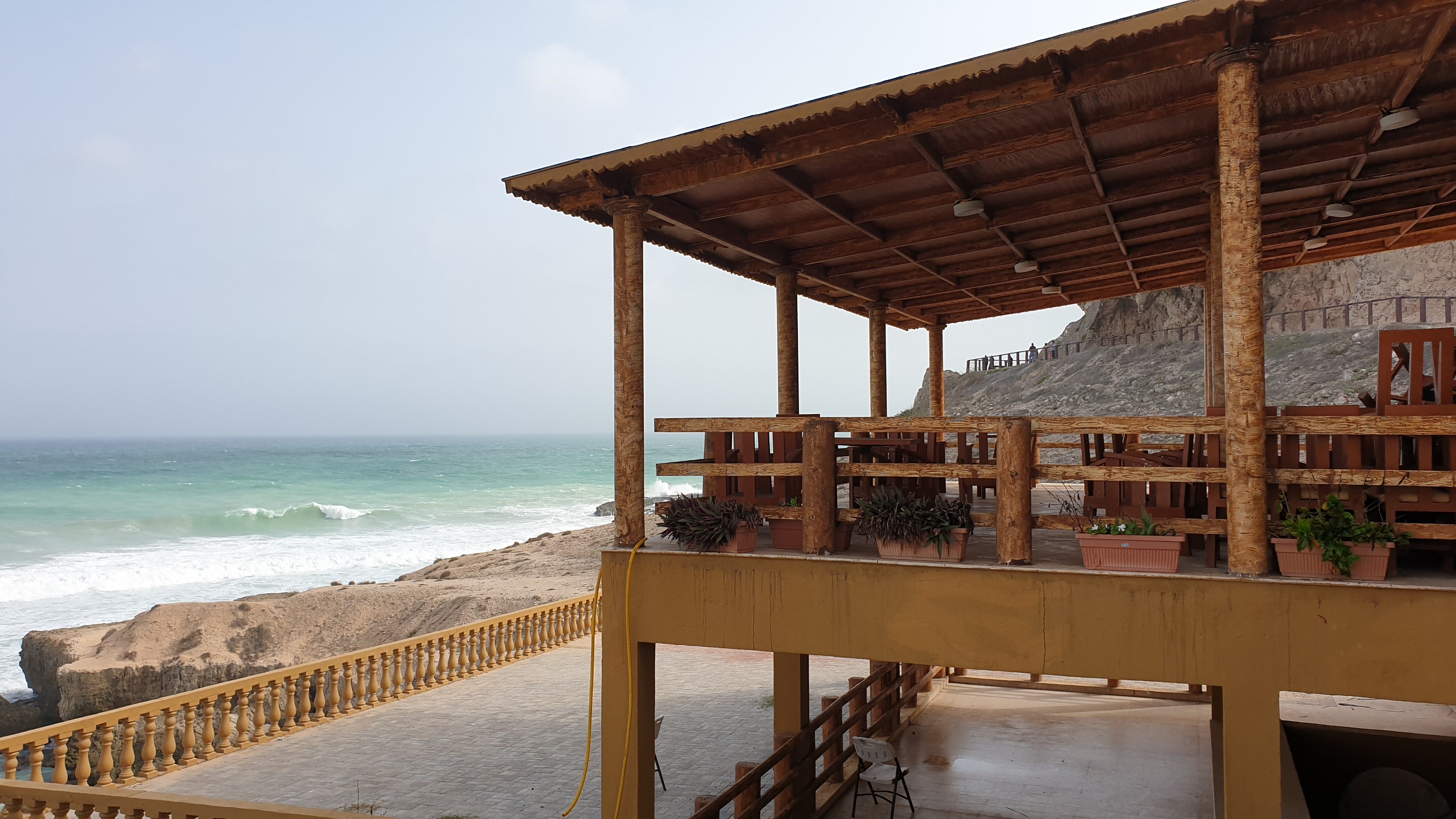
by way of enchantment. The city is set against a land and seascape of great
natural beauty. Especially striking are the coast of Raysut and Dahariz and
Maghsil and Salalah; the scenery of Mughsil and Awqad and Belid and Salalah and
Qurum; the springs of Razzat, Hamran, Jarziz, Aishint and Sahnout; the wadis:
Razzat, Nahiz, Arbut, Jarziz, Adwanb and Ashuq; and the uplands beyond Wadi
Nahiz, as well as Mount Hamrir and Mount Atin.
The splendour of this setting is complemented by
the many landscaped gardens and parks which enhance the city itself.Salalah
Public Park, Saada Public Park, Daharis, Ain Razzat and the New Salalah, Quf and
Moatazza Gardens are examples of these.
These natural attractions, in combination
with the accommodating climate of the Dhofar Governorate, have caused Salalah to
become a favoured resort for tourists from within the country and from abroad.
Wilayat
Thumrayt
In ancient times the deserts of the
Wilayat of Thumrayt played a role in the frankincense trade, which produced the
civilization of al Shisr/Wubar with its columns and domes. Today it is an
archaeological site.
The Wilayat of Thumrayt is the gateway to the
Governorate of Dhofar.It borders on the wilayats of Salalah to the south,
Shaleem and the Hallaniyat Islands to the east and Muqshin to the north.
To the west it borders on Wilayat of al Mazyounah. It is 80 Kilometres from
Salalah.
Its main features are the old ruined site of Hanoun with its pre-Islamic Arabic
inscriptions, the oasis of al Shisr, its wadis which extend right into the
heart of the desert, Wadi Andhour with its traces of early human settlement, and
the Wadi Dawkah Reserve, which has been added to the UNESCO's World Heritage
Cultural List because of its importance as a site on the old frankincense trade
route; najdi frankincense trees grow here in abundance.
Thumrayt has five niyabats - Madhiy, al Shisr, Halouf wa Masheelah, Barbazoum
and Dhahboun.
Madhiy, 80 Kilometres from the centre of the wilayat on the edge of the northern
Dhofar uplands, is a desert area with date palms and late Iron Age burial
grounds with triliths. The site of Maseenan - a pile of large stones which is
believed to be ancient - is also in this niyabat.
The Niyabat of al Shisr is 85 Kilometres from the centre of the wilayat. The old
site of Wubar is one of the most ancient sites in the Governorate of Dhofar and
was discovered in the Niyabat of al Shisr by the Trans Arabia mission in 1992
following confirmation of the significance of some satellite images of the area.
Al Shisr, which is 160 Kilometres north of Salalah, lies to the north west of
the Salalah¬Thumrayt road and the route to the site is signposted.
The excavations at Wubar were carried out by an international team generously
supported by the Sultanate. The team spent several seasons at the site and
discovered that much of it consisted of defensive fortifications; their finds
there included implements and ceramic and stone vessels.
In Barbazoum and Dhahboun a range of government services are available including
health centres and modem housing.
The Niyabat of Halouf wa Masheelah, 37 Kilometres from the centre of the
wilayat, also offers a range of government services. Its main
feature is the large number of najdi frankin¬cense trees that grow within its
borders.
Jabal Halouf - a local landmark - is a white mountain ten Kilometres from the
centre of the niyabat.
Trees of the palm type grow in abundance in Thumrait's wadis and the local
people use their fronds to make ropes.
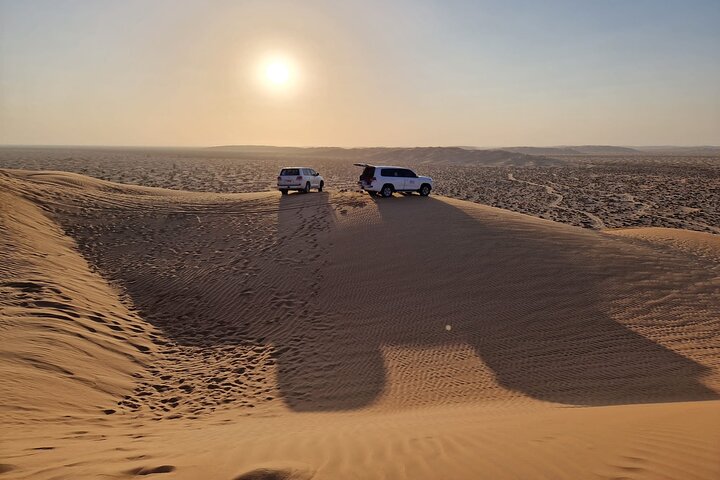
The sand dunes of the Empty Quarter lie along the northern boundary of the
wilayat and are a popular destination for visitors during the winter months.
The desert round Thumrayt has many shady trees and is home to numerous species
of wild animals.
Herds of oryx and gazelles used to live in this area, though today they can only
be seen in the deserts of the Wusta Governorate.
Wilayat Taqah
The Wilayat of Taqah is always mentioned
in connection with Khor Rori - the site of the historic city of Sumhuram
which flourished in ancient times. Taqah lies on the Governorate of Dhofar's
coastal strip between the wilayats of Salalah and Mirbat and is 30
Kilometres from the city of Salalah. It has two niyabats - Madinat al Haqq
and Jibjat.
Madinat al Hagq overlooks an area of fertile slopes and
wadis with plenty of natural pastures which become lush grassy meadows with
green trees during the khareef and attract large numbers of visitors.
The districts of Khabrart and Shaiheet are nearby. The
Niyabat of Jibjat also has green meadows, as well as a mild climate
throughout the year. A pre-Islamic burial ground has been discovered on the
eastern and western sides of Khor Sawli. The ruins of old Taqah - around one
Kilometre to the west of the present town - are still standing.
Other local landmarks include Qasbar Fort on a hilltop north
of Khor Taqah spring and the old cemetery, which covers an area of around
60,000 square metre.
There are hewn limestone columns in the Dhrirat district,
which are considered to be of major significance. To the north of the town
of Taqah the remains of stone walls and other traces of a human settlement
can be seen on the summit of Jabal Masnain, about 1,500 feet above sea
level.
Taqah Fort in the centre of the town is an important historical monument
dating from the 19th century AD which illus¬trates the skills of the local
architects in those days.
The government has restored it and made it into a museum with
exhibits which include old artefacts and handicrafts. It has been open to
the public since 1994.
The Wilayat of Taqah's other tourist attractions include its
silver beaches, its three springs at Darbat, Tubruq and Athum, its caves and
its khors. Sardine fishing is one of the most common occupations in the
wilayat. Sardines are caught in vast quantities during the season, then
dried and used as animal fodder.
Wilayat
Mirbat
The Wilayat
of Mirbat is in the eastern part of the Governorate of Dhofar. It borders on
the Wilayat of Sadah to the east, the Wilayat of Taqah to the west, Jabal
Samhan to the north and the Arabian Sea to the south. It is 75 Kilometres
from the city of Salalah.
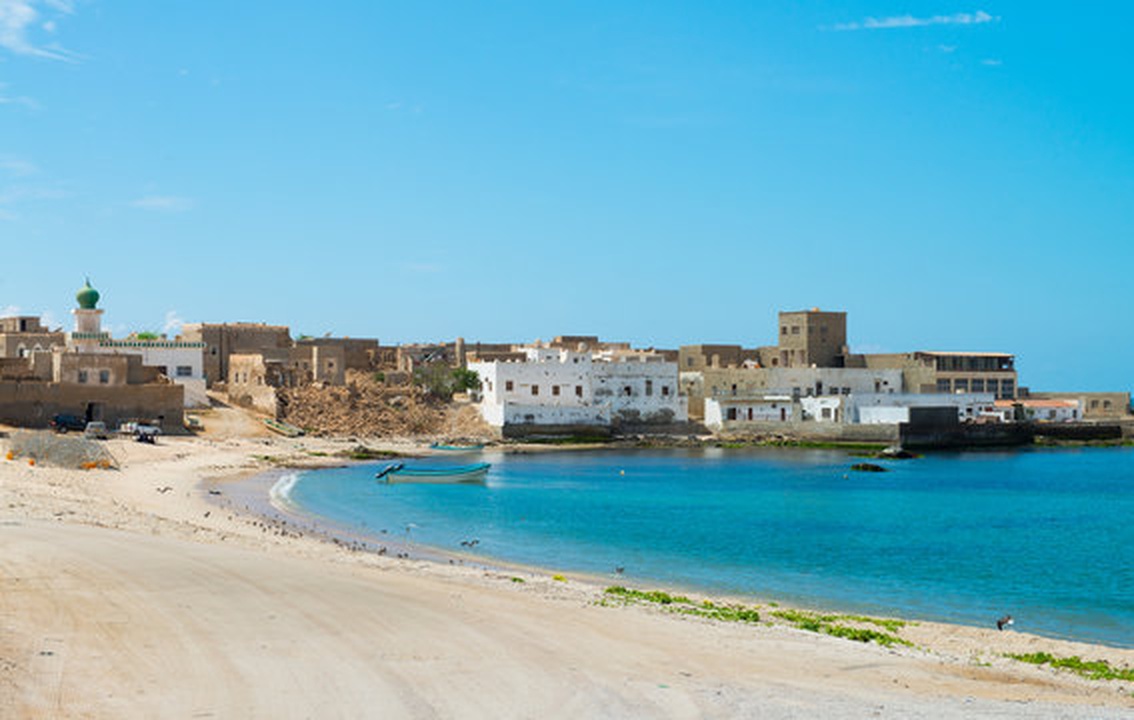
Its seas are teeming with fish and its coral
reefs have made it one of the most popular destinations for divers in the
country. In view of the importance of abalone as an economic resource, a
study has been carried out on the possibility of setting up an abalone
farming project in the wilayat with the aim of boosting the stocks of
abalone in those areas which have suffered from over-fishing.
Mirbat has a population of 14,987 and is around
60 Kilometres from the city of Salalah. The Niyabat of Tawi Ateer comes
under its jurisdiction. Some 25 Kilometres from the centre of the wilayat,
it forms the western gateway to the Jabal Samhan reserve and has a gigantic
cave with an area of over 300 million square metres called Taiq Cave, which
is one of the biggest sink-holes in the world; its area is over 75 times as
great as the area of the massive Seeduw Cave in Malaysia. Its discovery has
truly put Tawi Ateer on the tourist map.
The Niyabat of Tawi Ateer, which is one of the
biggest niyabats in the Governorate of Dhofar in terms of area, has
extensive pastures and 116 villages.
Other tourist attractions in the Wilayat of
Mirbat include the "place of the optical illusion", in which a car driver
feels that his vehicle is going backwards despite the fact that his engine
is turned off, he is not using his brakes and the car is moving for-wards
and downhill.
This phenomenon can also be found in
Scotland, Australia, China and various other places around the world.
Tourists can also stand on the edge of Tawi Ateer Hole, which is 211 metres
deep - the height of a 70-storey building - and listen to the sound of the
birds that nest among its rocks and crevices.
Wilayat
Sadah
If they visit Sadah at the right time of year,
visitors will have the chance to taste fresh abalone and lobsters straight out
of the sea.
This beautiful seaside wilayat with villages scattered
along its shores is east of Mirbat and 135 Kilometres from the city of Salalah.
It has numerous ancient buildings and its restored fort, which is at the eastern
end of the chain of old fortifications along the Dhofari coast, is now a museum
which contains various household utensils from earlier times.
Some Kilometres from the centre of the wilayat
are the ruined houses and towers of an old village known to the local people as
al Mahallah. Hasik - a niyabat of the Wilayat of Sadah - is 70 Kilometres from
the centre of the wilayat and 205 Kilometres from Salalah. Situated on a
headland, its coast consists of steep limestone hills which have been eroded
from below, while the seabed is sandy and sardines can be seen swimming in the
shallow water. Hasik's chain of hills is broken by wadis and small creeks with
sandy beaches.
The niyabat has an ancient ruined town and an old
harbour that was used in ancient times for the export of frankincense. In Wadi
Seenaq there is a khor (creek) surrounded by marine plants and shrubs that
provide a refuge for nesting turtles and the migrant birds which breed in the
nearby hills. Other khors and wadis include Khor Ahreez, Wadi Rabkut and Wadi
Dahnat, which has the stone ruins of an ancient settlement on its banks,
indicating that there was a prosperous town or city there in earlier times.
Hasik itself, with its unique harbour, was well-known
to Arab seafarers as a trading centre on the Arabian Sea, particularly for
merchants trading in top quality hawjari frankincense. Hasik has a natural
sheltered harbour. Popular picnic spots during the rainy season include the
cascading waterfalls of Natif and the overflowing pools fed by the springs of
Shairookh and Ain 'Aidhah. In earlier times traders used to meet on the edge of
the town to barter over their wares, which would then be loaded onto ships and
transported to East Africa, Yemen and India.
The precious abalone breed in offshore waters. Some 45
tonnes of this rare shellfish with a high nutritive value are caught every year
during the diving season'.
The administrative centre of the Niyabat of Hadbin
comes under the Wilayat of Sadah. It lies on a stretch of coast with beautiful
khors between two mountains - Ras at Naws and Jabrin - at the southern edge of
the Jabal Samhan range and is 32 Kilometres from the centre of the wilayat. It
is famous for its lobsters and abalone, as well as for several other varieties
of fish.
Jawfa administrative centre, which also comes under the
wilayat and lies five Kilometres to the north of the town of Sadah, used to be a
staging post for the camel caravans carrying frankincense from Jabal Samhan to
the old port of Sadah. It has several springs and wadis and a number of social
housing units have been built in this area.
Wilayat Rakhyut
In ancient times the Wilayat
of Rakhyut was a centre of the frankincense trade with a busy harbour which used
to export frankincense, livestock and animal products.
Rakhyut is an attractive seaside town beneath the slopes of
Jabal al Qamar near the heights of Ambaruf. It is 145 Kilometres west of Salalah
and borders on the wilayats of Salalah to the east and Dalkut to the west.
Historically, Rakhyut has been famous for frankincense,
animal husbandry and fishing, while today its lovely beaches and lagoons ensure
that it offers captivating views at any time of the year. Its niyabat of Shahb
As'eeb is 15 Kilometres from the centre of the wilayat and becomes an expanse of
emerald green during the khareef season.
Rakhyut's most popular tourist beaches lie beneath the
mountain peaks and include Ras Sajer, Khorat, Keenzar, Shairooth, Daghar and
Kanzur. Henna and tamarind trees grow in al Hawtah district, where there are
numerous flowing springs.
At al Qazayeh the traces of an ancient human
settlement can be seen including the remains of a stone wall. Extensive
development has taken place in the wilayat under the Renaissance.
Wilayat Dalkut
The road to
the Wilayat of Dalkut passes over mountains and through wadis with green trees
which are particularly lush and fragrant during the summer - or khareef'-
season. Lying along the shores of the Arabian Sea, Dalkut is one of Oman's most
beautiful wilayats - a stunning combination of mountains and beaches with a
modern town and tranquil villages.
Dalkut is 160 Kilometres west of Salalah. To reach it,
you drive to al Mughsail, then up the steep winding Aqeeshan road to the Niyabat
of Shahb As'eeb in the Wilayat of Rakhyut and from there to Wadi Seeq and Dalkut.
The seas off Dalkut's rocky shore are full of fish and crustaceans.
The Niyabat of Khadhrafi is within Dalkut's boundaries,
along with the settlements of Hafuf, Dahaq, Hakab, Himmut, Urf and Ghaduw and
the mountainous districts and plateaux of Dara, Sheerashti, Ghoota, Sarfait and
Dharbat Ali. Dalkut borders on the Wilayat of Rakhyut to the east and the
Republic of Yemen to the west.
Its fine beaches have plenty of tourist potential and
it has springs flowing into the wadis of Jabal al Qamar. Proof that the area was
inhabited many centuries ago can be found in the caves of Sheesaa', Asbair,
Mashlul and Hufrat Makrees, several of which have ancient inscriptions on their
walls. Some three Kilometres east of the town is an old shady tree known as
Hiroum Dheeri (or "The Tree" From Far Away). Resembling a fig tree with a huge
trunk, it has become a unique symbol of the wilayat's natural environment.
Wilayat Muqshin
As its climate is generally different
from that of most of the Sultanate's other Governorates, date palms are a rare sight
in the Governorate of Dhofar. An exception, however, is the Wilayat of Muqshin,
which has many oases with date palms.
Muqshin, in the north east of the Governorate of Dhofar on the eastern edge of
the Empty Quarter desert, has a population of 529 and is 344 Kilometres from
Salalah. It lies in the heart of the desert and consists largely of sand dunes.
However, it also has extensive groundwater stocks because it is a meeting point
for a number of wadis which flow down from the Dhofar mountain range and al Najd
into the sands.
It has been visited by numerous travellers and over the centuries many trading
caravans have passed through it. Today it is a tourist destination, particularly
for amateur explorers and desert sports enthusiasts.
The Wilayat of Muqshin has four niyabats - Ramlat Muqshin, al Mushash, Mandar al
Dhibyan and Marsawdad - as well as a number of desert villages. Ramlat Muqshin
is an area of sand dunes 420 Kilometres from Salalah. Al Mushash, on the
south-eastern fringes of the Empty Quarter, is also an area of sand dunes and is
linked to the centre of the wilayat 240 Kilometres away by a graded road. It is
400 Kilometres from Salalah. Mandar al Dhibyan, also on the south-eastern edge
of the Empty Quarter, is linked to the centre of the wilayat by a
160-Kilometre-long graded road and is around 350 Kilometres from Salalah.
Marsawdad, on the southern edge of the Empty Quarter, is 105 Kilometres from the
centre of the wilayat and 216 Kilometres from Salalah. In each of the niyabats
there is a government-built administrative centre which offers the local
inhabitants a range of services.
Muqshin attracts campers and other visitors during the winter months, when it
has a mild climate.
Some ancient sites and implements discovered in the wilayat show evidence of
human settlement during the Palaeolithic period.
Wilayat Shaleem and The Hallanitat Island
The Wilayat of
Shaleem and the Hallaniyat Islands is not a heavily populated area, and it is
somewhat isolated and less developed than the other wilayats of the Governorate
of Dhofar.
Even so, the Renaissance has left its mark here and, despite the fact that this
wilayat is still unspoilt, each of its three niyabats has an administrative
centre which offers the local people a full range of services.The Wilayat of
Shaleem and the Hallaniyat Islands lies up the coast around 300 Kilometres from
the city of Salalah.
It has three niyabats are al Shuwamiyah, Deemeet and
the Hallaniyat Islands - a group of five small islands (al Halaniyah, al
Qibliyah, Shaneef, al Sawdah - which are home to numerous species of sea birds
and al Hasikiyah).
The population is concentrated on the island of al
Halaniyah and services are provided for the local inhabitants by air or by sea;
there is a small landing strip on the island as well as a harbour. There are
three routes to the Wilayat of Shaleem and the Hallaniyat Islands. Visitors from
Salalah can reach it via Thumrayt by turning right towards Marmul. It can also
be reached from Haima by taking the road towards Nimr, or along the coast road
through the Wilayat of al Jazer in the direction of al Lakbi.
The fourth route will be available when the road has
been cut through the mountain sepa¬rating the niyabats of Hasik and al
Shuwamiyah, enabling travellers to take the coast road from Salalah to Muscat
via the towns and villages of the Wusta and Sharqiyah Governorates, rather than the
inland desert road to Muscat as is the case at present. The wilayat is renowned
for its lovely sandy and rocky beaches.
It has enormous quantities of fish in its offshore
waters and several private sector companies have invested in local fish canning
and marketing projects. Other notable natural features include springs, creeks,
lagoons and headlands. The Niyabat of al Shuwamiayah is linked to the centre of
the wilayat by a 40 Kilometre-long asphalt road. With plenty of tourist
potential as a summer resort, its main features are thirty Kilometres of
beautiful beaches, wadis such as Wadi Fagharah, archaeological sites and caves.
Wilayat Al Mazyounah
It is 80 Kms from Salalah and its main
features are the old ruined site of Hanoun with its Pre-Islamic Arabic.
Inscription, the Oasis of al shisr, its wadis which extend into the heart
of the desert wadi Andhour with its traces of early human settelment, and the
wadi Dawkah reserve, which has been added to the UNESCO's World Heritage
cultural list because of its importance as a site on the old frankincense trade
route, najdi frankincense trees grow here in abundance.
Traditional
Occupations
Wilayat Salalah
Salalah is noted for a
diversity of traditional livelihoods and crafts, industries, arts and folk
customs still practiced in the city and its environs. Traditional livelihoods
include commerce, blacksmithing, the herding and breeding of livestock,
needlework and embroidery and agriculture.
Among the indigenous Industries are boat and skiff building,
pottery, palm-weaving, rope-making, dairy production, the making of fishing
nets, confectionery, silver and gold jewellery work, woodcarving and
leatherwork.
Wilayat Thumrayt
The people of Thumrayt still
engage in a number of crafts and industries practiced traditionally in this
locality. Livestock herding and breeding is a principal livelihood, along
with the harvesting of frankincense and the overland caravan trade.
The spinning and weaving of wool is an
indigenous local industry, along with tent making, palm frond weaving and
the leather industry.
Wilayat Taqah
Taqah has a rich diversity of
tradional livelihoods, industries and crafts, customs and folk arts.
Fishing, herding and breeding, carpentry and the production of dairy
produce and honey are foremost amongst the indigenous livelihoods of this
locality.
Traditional industries include the making of leather goods
and basketwork from palm-fronds, fishing nets, bedouin occupations,
needlework and embroidery.
Willayat Mirbat
Common occupations in the wilayat
include fishing, sardine drying, animal husbandry. There are excellent
pastures in the mountains, particularly during the sarb season from September to
December, leather tanning, ghee production, frankincense production
(particularly hawjari - the best quality frankincense) and boat-building,
including model boats.
Willayat Sadah
In the area of indigenous
industries, crafts and social customs, Sadah still engages in the frankincense
trade to this day, as well as sea fishing. In view of its good returns, diving -
in particular for Safilah - is first amongst the traditional livelihoods still
practiced. Honey production is also popular here, and livestock breeding and
herding. Fish baskets and nets are made, and tanning, plaster quarrying, palm
frond weaving, pottery, weaving and embroidery are practiced.
Wilayat Rakhyut
Local crafts and
traditional livelihoods include livestock breeding, fishing and pearl-diving,
the harvesting of frankincense and honey and a small amount of farming - of
beans and corn and cucumber. This latter is a seasonal activity practiced only
in the autumn, and one which is dependent on the appropriate rainfall.
Traditional products are dairy produce, leather goods, ceramic ware and ropes.
Wilayat Dalkut
Local crafts and traditional livelihoods include livestock
breeding, fishing and pearl-diving, the harvesting of frankincense and honey and
a small amount of farming - of beans and corn and cucumber. This latter is a
seasonal activity practiced only in the autumn, and one which is dependent on
the appropriate rainfall. Traditional products are dairy produce, leather goods,
ceramic ware and ropes.
Wilayat Muqshin
The inhabitants here are for the most part herders and breeders,
particularly of camels, as well as planters of dates and grasses. They also
manufacture goods from leather and palm fronds.
Wilayat Shaleem and The Hallanitat Island
The most prominent of the traditional livelihoods
engaged in by the local population is the raising of camels, sheep and goats,
pearl-diving, the harvesting of frankincense, palm-frond weaving and the making
of leather goods, and a variety of needlecrafts engaged in by the women of the
Governorate.
|