Oman and The World
Foreign Affairs
The
Sultanate has a long history of contacts and relations with countries both
within and outside the Arab world. Over many centuries, trade has flourished
with the Indian sub-continent and Far East, and in more recent times, with
East Africa. The Sultanate was the first Arab country to establish
diplomatic contact with the United States of America in the first half of
the nineteenth century, by which time it already had relations with France.
The bicentennial of the treaty relationship with Great Britain was
celebrated in January 2000.
In 1970, the Sultanate of Oman faced the formidable challenge of winning
diplomatic recognition in international circles after years of isolation. In
1971, Oman joined the Arab League and the United Nations. In 1972, the
Sultanate became a member of the Islamic Conference Organisation and in
1973, a member of the Non-Aligned Group of Nations. Since then, Oman has
joined many international organisations and was a founder member of the Arab
Gulf Cooperation Council (AGCC) in May 1981. Oman has so far hosted the
three annual Summits of the Gulf States in Muscat. Oman is due to host the
Summit again in 2001.
His Majesty attended the 20th AGCC Summit in Riyadh in November 1999. At the
close of the meeting, the Supreme Council announced that the six states had
pledged to create a customs union by 2005 and to work together to stabilise
the oil market. Although there was wide-ranging consideration of a number of
international and regional political issues, the focus of the Summit centred
upon the economy. In the face of globalisation, the Supreme Council
concluded that the creation of a strong economic bloc was a necessity. The
customs union will come into force on 1st March 2005. In the meantime, it
was agreed that member states would revise their customs tariffs gradually
in order to achieve a uniform tariff of 5.5.% on basic commodities and 7.5%
on other goods to come into force at that time.
The
21st Summit in 2000 was hosted by Bahrain. It has been agreed that the
leaders would also hold half-yearly consultative meetings between annual
summits. In April 2000, His Majesty hosted the second consultative meeting
of the AGCC Heads of State at the Al-Bustan Hotel in Muscat.
Foreign Policy
Oman's foreign policy, as developed since 1970, is based on four basic
principles:-
- the development and maintenance of good relations with Oman's neighbours.
- an outward looking and internationalist outlook, as befits long standing
maritime relations.
- a pragmatic approach to bilateral relations, emphasising underlying
geostrategic realities rather than temporary ideological positions.
- the search for security through co-operation and peace, rather than
conflict.
These principles have been consistently applied and in the post-1989
international context have proved both valuable and durable. Oman's
adherence to these principles has allowed foreign policy to be flexible and
to meet the challenges of the new international environment with confidence.
In the application of these principles, considerations of economic interest
are playing an increasingly important role.
The Middle East Peace Process
Oman
has been fully committed to the Middle East peace process since its
inception in 1991. The Sultanate joins the international community in
calling for the achievement of a lasting, just and comprehensive peace which
will bring stability and prosperity to the whole region, as well as peace
and security for all its people. Oman continues to affirm its complete
support for the legitimate rights of the Palestinian people to determine
their own future in their own land, including the establishment of an
independent state. Oman has participated actively in the multilateral talks
phase of the peace process and has steadfastly opposed the use of violence
and terrorism.
In
January 1996, representatives of Oman and Israel signed a letter of
understanding on the establishment of Trade Representative offices in Muscat
and Tel Aviv to develop economic, scientific and trade relations. However in
December 1996, Oman decided to freeze its fledgling ties with Israel until
it was felt that the present government of Israel was genuinely and
sincerely committed to honour the peace process.
In February 2000, Oman condemned the Israeli raids on Lebanon as an
unjustifiable act of aggression, in the belief that the destruction of
domestic utilities like power stations was totally unacceptable to world
opinion and did not serve the peace process.
Gulf Crisis
Oman is committed to its policy of supporting United Nations Resolutions
and has advised Iraq through diplomatic channels that UN weapons inspection
teams must be allowed to return. Oman has always urged a peaceful solution,
reached through diplomacy, to such crises in order to avoid a repetition of
the conflict in 1991. At the same time, Oman has expressed deep concern for
the sufferings of the Iraqi people. Concern was also voiced by the Sultanate
over the renewed confrontation between Iraq and the UN over weapons
inspections, which resulted in punitive action being taken in December 1998.
The recent visit of an Omani military delegation on a technical mission to
Iran led to rumours in the press that a secret security pact had been signed
with Iran. In April 2000 the Ministry issued a statement denying that any
defence or security agreement had been signed, saying that the mission was
restricted to co-operation between the two countries to combat drug
trafficking and illegal immigrants.
The Middle East Desalination Research Centre
The Centre (MEDRC) was established in Muscat on 26th December 1996 within
the context of the Middle East peace process as a result of an Omani
initiative within the Water Working Group. Founding members include the
United States, Japan, Israel, Korea and the European Commission.
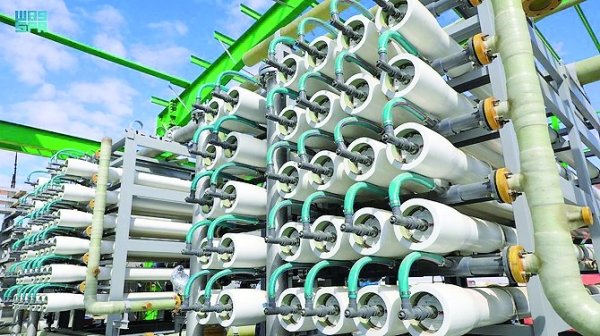
It is an international non-profit institution, which sponsors research and
development in desalination technology for the Middle East and North Africa
(MENA) region. It also co-ordinates training and education programmes to
build desalination technical capacity in the MENA countries and provides
unique information products, services and contacts to facilitate business in
the MENA market place.
As of January 2000, 70 research proposals had been received and 27
organisations in 12 countries are now working on MEDRC primed and assisted
projects, with a total budget of US$2.4 million. Sultan Qaboos University is
involved in 10 of these projects.
Last year, the Centre launched a Corporate Membership Programme and formed
an Industry Advisory Council in order to increase public awareness and to
encourage private sector participation in the work of the Centre.
Foreign Policy & Economic Development
Oman's foreign policy is guided by the need for the Sultanate to take an
active role in the global economy. Free market principles are enshrined in
the Basic Statute of the State as the basis for the development of the
economy. Therefore, the Sultanate is fully committed to the principles which
underpin the World Trade Organisation (WTO). Oman's accession to the WTO was
initiated in 1996.
The General Council of the WTO established a working party to examine the
Sultanate's application for membership. During 1997, two meetings were held
with the working party in Geneva to discuss Oman's foreign trade position,
based on a memorandum submitted by the Government. Proposals were made for
transitional periods in implementing some of the WTO agreements.
Two further meetings of the working party were held in 1998 and there were
meetings of the working party in May and October 1999. A delegation from
Oman attended the Seattle meeting at the end of 1999.
By the beginning of 2000, Oman had signed bilateral agreements with ten of
its trading partners concerning goods and services with the United States,
the EU, Japan, Canada, Australia, New Zealand, Switzerland, Mexico, India
and the Republic of Kyrgyzstan. These agreements which resulted from several
rounds of negotiation on market access, will pave the way for Oman's entry
to the WTO in the near future.
Indian Ocean Rim Association (IORARC)
In March 1997, Oman was among the 14 founder members of the Indian Ocean
Rim Association for Regional Cooperation, a new association which aims to
improve trade links and inward investment through the Indian Ocean region,
from Australia, through South East Asia, India, Africa and the Arabian
Peninsula.
Oman, with India, Mauritius, South Africa, Australia, Singapore and Kenya
had been working towards this association for at least two years. Sri Lanka,
Malaysia, Indonesia, Yemen, Tanzania, Mozambique and Madagascar have since
joined the movement.
In January 2000, the Sultanate hosted a ministerial meeting of the IORARC,
at which Bangladesh, Iran, Seychelles, the United Arab Emirates and Thailand
were admitted as new members, bringing the total membership to 19. The UK,
China, Japan and Egypt have been admitted as dialogue partners.
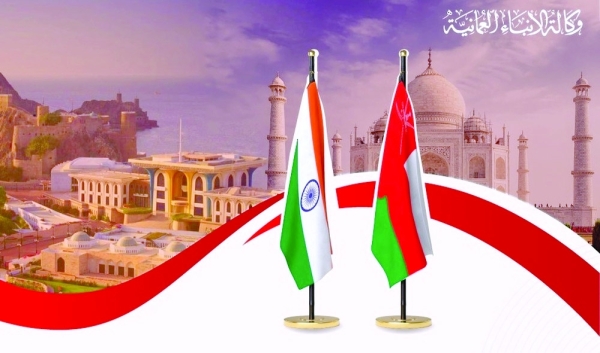
The importance of close relations with South East Asia was underscored by
His Majesty's state visit to India in April 1997. This was followed in
August 1998 by the visit of Indian Prime Minister Atal Behari Vajpayee to
Oman. Former Indian Prime Minister Narasimha Rao and President Shankar Dayal
Sharma visited the Sultanate in 1996. In early 1997, an official high level
delegation was sent to Sri Lanka and another to Japan and Brunei to
strengthen existing ties and trade relations. In July 1997, a delegation
visited Beijing for talks with senior Chinese officials.
Border Demarcation
In November 1992, a ceremony was held in Riyadh to sign the final border
maps between Oman and Saudi Arabia. The demarcation agreement had been
signed between the two countries in March 1990. Copies of the maps showing
the international boundaries between Oman and Saudi Arabia were deposited
with the Arab League in Cairo in November 1995.
In June 1995, Oman and Yemen completed the demarcation of their borders in
accordance with an agreement signed in 1992.
In November 1997, a ceremony was held in Cairo when Oman and Yemen deposited
their international boundary maps with the Arab League. In 1999,
construction of the 243-km highway linking Dhofar with Yemen was completed.
Annexes to the border agreement between the Sultanate and the United Arab
Emirates were signed in Sohar in May 1999 during the visit of His Highness
Sheikh Zayed bin Sultan Al Nahayan. The annexes regulate the border controls
and define the authority of each country along their frontiers.
Oman has now demarcated all her land and sea boundaries. Oman and Qatar have
strengthened diplomatic ties as a result of which their nationals can now
travel to the others' country on an identity card instead of a passport.
This easing of border controls came into force in September 1995. Oman and
the UAE have had a similar agreement since 1992.
Diplomatic Relations
Since 1970, the Sultanate of Oman has gradually established links all
over the world and has never broken off diplomatic relations with any
country. In 1999, Oman's first woman ambassador was accredited to The Hague.
Diplomatic relations have been established with 135 countries:-
Albania, Republic of
Algeria, Democratic and Popular Republic of
Argentine Republic
Armenia, Republic of
Australia, Commonwealth of
Austria, Republic of
Azerbaijani Republic
Bahrain, State of
Bangladesh, People’s Republic of
Belarus, Republic of
Belgium, Kingdom of
Bolivia, Republic of
Bosnia and Herzegovina, Republic of
Brazil
Brunei Darussalam, State of
Bulgaria, Republic of
Burkina Faso
Burundi, Republic of
Cameroon, Republic of
Canada
Chad, Republic of
Chile, Republic of
China, People’s Republic of
Colombia, Republic of
Comoros, Federal Islamic Republic of the
Congo, (formerly Zaire) Democratic Republic of the
Côte d’Ivoire, Republic of Ivory Coast
Croatia, Republic of
Cuba, Republic of
Cyprus, Republic of
Czech Republic
Denmark, Kingdom of
Djibouti, Republic of
Ecuador, Republic of
Egypt, Arab Republic of
Eritrea, State of
Estonia, Republic of
Ethiopia, Federal Democratic Republic of
Finland, Republic of
France
Gabonese Republic
Gambia, Republic of the
Germany, Federal Republic of
Ghana, Republic of
Greece, Hellenic Republic of
Guatemala, Republic of
Guinea, Republic of
Guinea-Bissau, Republic of
Guyana, Co-operative Republic of
Honduras, Republic of
Hungary, Republic of
Iceland, Republic of
India, Republic of
Indonesia, Republic of
Iran, Islamic Republic of
Iraq, Republic of
Ireland
Italy, Republic of
Jamaica
Japan
Jordan, Hashemite Kingdom of
Kazakhstan, Republic of
Kenya, Republic of
Korea, Democratic People’s Republic of
Korea, Republic of
Kuwait, State of
Kyrgyzstan, Republic of
Latvia, Republic of
Lebanon, Republic of
Lithuania, Republic of
Luxembourg, Grand Duchy of
Macedonia, Republic of
Malaysia
Maldives, Republic of
Mali, Republic of
Malta, Republic of
Mauritania, Islamic Republic of
Mauritius, Republic of
Mexico, United Mexican States
Moldova, Republic of
Mongolia
Morocco, Kingdom of
Mozambique, Republic of
Nepal, Kingdom of
Netherlands, Kingdom of the
New Zealand
Nicaragua, Republic of
Niger, Republic of
Nigeria, Federal Republic of
Norway, Kingdom of
Pakistan, Islamic Republic of
Palestine
Panama, Republic of
Peru, Republic of
Philippines, Republic of the
Poland, Republic of
Portugal, Republic of
Qatar, State of
Romania
Russian Federation
Rwanda, Republic of
Saint Lucia
São Tomé and Principe, Democratic Republic of
Saudi Arabia, Kingdom of
Senegal, Republic of
Seychelles, Republic of
Sierra Leone, Republic of
Singapore, Republic of
Slovak Republic
Slovenia, Republic of
Somalia
South Africa, Republic of
Spain, Kingdom of
Sri Lanka, Democratic Socialist Republic of
Sudan, Republic of the
Sweden, Kingdom of
Switzerland
Syrian Arab Republic
Tanzania, United Republic of
Thailand, Kingdom of
Tunisia, Republic of
Turkey, Republic of
Turkmenistan, Republic of
Uganda, Republic of
Ukraine
United Arab Emirates
United Kingdom of Great Britain and Northern Ireland
United States of America
Uruguay, Oriental Republic of
Uzbekistan, Republic of
Venezuela, Republic of
Vietnam, Socialist Republic of
Yemen, Republic of
Zambia, Republic of
Zimbabwe, Republic of
Membership of the Sultanate in Gulf, Arab, Islamic and
International Organisations
Gulf Organisations Date joined
Arab Gulf Cooperation Council 25.5.81
Arab Centre for Educational Research 1.12.73
Higher Education Council 1.12.73
Arab Education Office for the Gulf States 1.12.79
Arab Gulf States’ Joint
Programme Production Organisations 25.3.82
Arab Gulf University 16.8.80
Co-operation Council States Specifications
and Standards Board 9.11.82
Gulf International Bank 1.2.86
Gulf Organisation for Industrial Investment 20.10.76
Gulf News Agency 13.6.82
Gulf States Labour & Social Affairs Minister’s
Follow-up Office 6.2.78
Gulf Television Board 10.4.80
Technical Office for Communications
(Gulf States Co-operation Council) 1983
Arab Organisations
League of Arab States 29.9.71
Arab Academy for Maritime Transport 31.8.75
Arab Administrative Development Organisation 4.75
Arab Bank for Economic Development in Africa 1.2.75
Arab Centre for the Study of Arid Zones
and Dry Lands 30.4.75
Arab States Civil Aviation Council 15.10.73
Arab Fund for Economic & Social
Development 30.4.75
Arab Girl Guides Office 1976
Arab Health Ministers’ Council 4.9.75
Arab Housing Ministers’ Council 23.9.82
Arab Industrial Development Organisation 12.1.80
Arab Interior Ministers’ Council 23.9.82
Arab Justice Ministers’ Council 23.9.82
Arab Labour Organisation 9.2.73
Arab League Educational Cultural
and Scientific Organisation 14.6.73
Arab Monetary Fund 5.2.77
Arab Organisation for Agricultural
Development 18.2.74
Arab Organisation for Classification of
Vessels 9.12.98
Arab Organisation for Specifications &
Standards 6.7.74
Arab Planning Institute 7.12.80
Arab Postal Union 1.7.71
Arab Scouts’ Office 1976
Arab Social Affairs Ministers’ Council 26.3.80
Arab Social Defence Organisation Against
Crime 26.3.73
Arab States Broadcasting Union 14.6.72
Arab Telecommunications Union 30.11.83
Arab Tourism Organisation 27.8.84
Arab Transport Ministers’ Council 28.3.85
Arab World Institute in Paris 30.11.87
Arab Youth & Sports Ministers’ Council 1.4.78
Arabsat 10.7.76
Inter-Arab Investment Guarantee Corporation 5.5.77
Organisation of Arab Cities 24.9.71
Agreement for Simplification Developing
Trade Exchange among the Arab States 29.10.97
Arab Agreement for Prevention of
Terrorism and Fundamentalism 22.4.98
Islamic Organisations
Islamic Conference Organisation (ICO) 29.2.72
al-Quds Fund (Jerusalem) 1976
International Committee for the
Preservation of Islamic Heritage 1978
Islamic Capitals Organisation 1982
Islamic Centre for Commercial Development 1979
Islamic Centre for Technical and Vocational
Training and Research 4.78
Islamic Development Bank 12.8.74
Islamic Education, Scientific
and Cultural Organisation (ISESCO) 1980
Islamic Fiqh Council 1982
Islamic History & Cultural Research Centre 1976
Islamic International News Agency 1970
Islamic States Broadcasting Organisation 1975
Islamic States Centre for Statistical,
Economic and Social Research Training 1977
Islamic Solidarity Fund 1974
International Organisations
United Nations Organisation (UN) 7.10.71
International Bank for Reconstruction
and Development 23.12.71
International Civil Aviation Organisation 23.1.73
International Epizootic Office 1977
International Fund for Agricultural Development 1983
International Labour Organisation (ILO) 31.1.94
International Maritime Organisation (IMO) 31.1.74
International Maritime Communications
Organisation 30.12.80
World Intellectual Property Organisation 19.11.96
International Monetary Fund (IMF) 23.12.71
International Telecommunications Union 28.2.72
UNESCO 10.2.72
FAO 11.71
UN Industrial Development
Organisation (UNIDO) 6.85
Universal Postal Union 17.8.77
World Health Organisation (WHO) 28.5.71
World Meteorological Organisation 2.2.75
World Trade Organisation (WTO)(observer status) 1996
Inter-Governmental Bureau for Informatics 6.9.86
Interpol 16.9.72
International Association of Lighthouse
Authorities 25.6.87
Internal Association of Schools and Institutes
of Administration 1986
International Civil Defence Organisation (ICDO) 1985
International Hydrographic Organisation 25.6.87
International Institute of Administrative Science 1985
International Organisation for Legal Meteorology 1989
International Organisation for Training
and Welfare of the Disabled ---
International Satellite Organisation (INTELSAT) 3.1.75
International Organisation for Specifications and
Standards 1989
International Union Against Tuberculosis 1985
International Union for Conservation of Nature 4.6.75
International Union of Child Welfare 1980
International Whaling Commission (IWC) 1980
Non - Aligned Movement 5.9.73
World Scout Bureau (WSB) 1979
World Association of Girl Guides (WAGGGS) 1987
World Council for Welfare of the Blind 1979
International Union of Radio Amateurs 1987
World Food Programme 1987
Indian Ocean Rim Association for Regional
Co-operation (IORARC) 3.97
Other Regional Organisations
Afro-Asian Insurance Union 1981
Afro-Asian Legal Consultation Committee 1986
Afro-Asian Organisation for Rural Development 1979
Arab Gulf Organisation for Support of Development
Activities for the United Nations (AGFUND)
Regional Organisation for Protection
of the Maritime Environment
Information
Information plays a vital role in the political, social and economic
future of a modern state. It brings many benefits to the people and gives an
added dimension to the quality of life and well-being of a nation. It is
therefore hardly surprising that as much attention has been paid to
advancing the media in Oman as any other aspect of the country's rapid and
successful development.
Sultanate of Oman Radio
In 1970, only one week after His Majesty the Sultan came to power, a
small broadcasting station was established at Bait al-Falaj. It was only a
one kW transmitter but it enabled people to hear the voice of their leader
for the first time. In the following year transmissions began from Salalah
and in 1972 a new medium wave 10 kW station was inaugurated, broadcasting
regularly 14 hours a day and 18 hours on holidays. In 1975, the Ministry
installed 100 kW medium wave transmitters in Muscat and Salalah and in 1979
linked the two broadcasting stations by satellite. VHF FM transmitters were
installed and further improvements were made to the medium and short wave
broadcasts so now the 'Voice of Oman' can be heard in all parts of the
country as well as in the Gulf and East Africa.
Broadcasts are now made in Arabic on 1242 kHz from Muscat (738 kHz from
Salalah). A new transmitter in Haima opened in 1995, which covers the
central area of the country on 576kHz. Transmissions are also made on FM
giving a total of 24 hours of broadcasting daily. There are also broadcasts
in English on 90.4 kHz from Muscat (94.3 kHz from Salalah). English FM has
been broadcast via Arabsat-A2 since April 1999. There are three main news
bulletins every day in English and the service broadcasts mainly classical
music in the mornings, with light entertainment and popular music in the
afternoon and evenings. During 1999, the English service introduced a
roadshow with prizes supplied by local sponsors which has proved extremely
popular.
On 4th March 2000, Radio Sultanate of Oman resumed the popular programme
Direct Transmission. The programme deals with local issues whereby people
express their views and reactions freely on the air. The listener may
express an opinion on any issue that affects him or the community. The
programme manager then passes the listener’s view to the concerned authority
for a direct comment.
The material broadcast is 80% locally produced, thanks to contributions from
all parts of Oman as well as from correspondents in 13 cities round the
world. Programmes are transmitted through the satellite TV channel allocated
to Sultanate of Oman Television by ARABSAT. In November 1997, Oman was one
of the first countries to use the Internet for radio and TV transmissions.
Sultanate of Oman Television
Television
transmissions from Muscat commenced in November 1974, while the Salalah
television station started transmitting to the Dhofar Governorate in
November 1975. In 1979, the two stations were linked by satellite to form a
single Oman TV channel. Oman thus became one of the first Gulf States to use
a satellite for domestic transmission. In the last few years, the Ministry
has set up an extensive network of main and relay booster stations. The 28
main stations, which use a satellite reception and retransmission system,
cover the whole of the Sultanate from Musandam in the Gulf to Sarfait on the
border with the Republic of Yemen. The total number of booster stations,
including the 89 relay stations, is 118, of which more than 60 are solar
powered. In spite of the mountainous nature of much of the terrain,
television transmissions are received in most of the populated areas. There
are plans to increase the coverage further into remote areas.
In 1998, the Ministry signed an agreement with the Egyptian Company NILESAT
to be allocated a channel on the system, which covers most of the Arab
world. As part of the agreement, four audio channels have also been leased
for use by Oman Radio and the Oman News Agency. In December 1998, Oman TV
started transmissions to European countries via Hot Bird 4 Satellite, 13
East, channel 97 frequency 12,654 on a polar horizontal linear direction.
The Ministry is currently discussing the possibility of leasing channels and
cable lines in Europe and America for the benefit of Arab audiences in those
countries.
Oman TV has achieved a major breakthrough with 24 hour broadcasts since
November 1998 with two thirds of its programmes locally produced. There are
now seven telecasts daily as part of the news bulletins.
Programmes
The Ministry, in association with other Government bodies, has continued
to place emphasis on national development issues with live telecasts once a
week as part of the daily morning coffee programme (Qahwaht al-Sabah). This
and "Aswad" programme were of particular relevance as part of the support
for the 'Second Year of the Private Sector' and helped a wider public
understand the importance of the private sector contribution to the economy.
A number of other popular live programmes continue to be transmitted such
as, Family Affairs and Economic Vision. Particular attention is paid to
programmes shown during Ramadhan. Quiz shows have become extremely popular
with viewers able to phone in the answers in the hope of winning a prize.
There are also studio audiences and teams competing for the prizes.
The Ministry attaches great importance to staff development and training.
Television staff have been sent on numerous courses and study programmes.
Omanisation of the radio and television services has always been an
important objective for the Ministry since the services began. Now around
95% of the staff are Omani which is quite an achievement given the technical
competence and skills demanded of them over such a short space of time.
The Oman Establishment for Press, News Publication and
Advertising
His Majesty Sultan Qaboos Bin Said, in a further move to advance the
media in Oman, issued Royal Decree No. 34/97 dated 25th June 1997, setting
up the Oman Establishment for Press, News Publication and Advertising. The
Royal Decree incorporates the duties of the Oman News Agency and the
Government Press and Advertisement Department under the name OEPNPA.
The OEPNPA is expected to review the development process and explain the
policies and stand of the Government.
The OEPNPA is a legal identity which enjoys an independent and
administrative status.
Oman News Agency
The Oman News Agency (ONA), which was established in 1986 by Royal
Decree, has become a valuable link in the mass media both at home and
abroad. At home it is the distribution channel for all official press
releases concerning foreign affairs, the economy and development, as well as
for social and cultural activities. The agency follows the international
news through its correspondents in foreign capitals and up-to-date
technology using the Internet and satellite. The ONA receives news and
pictures from Arab and foreign countries and transmits to them.
Publications
Oman currently has more than 25 publications available to the public, of
which five are daily newspapers (three in Arabic, two in English). The
remaining publications are of a specialist nature and are published by the
Government or other institutions like the Chamber of Commerce and Central
Bank of Oman. The most important Government publication is the Official
Gazette which contains the complete text of all Royal Decrees and
Ministerial Decisions. The promulgation of any new legislation is always
carried by the daily press and announced on radio and television.
The Ministry attaches great importance to staff development and training. To
this end, the 1999 training plan covered 82 different programmes and 303
employees were sent on courses both in Oman and overseas for higher studies.
All courses were designed to meet the training needs of the participants and
to enhance their knowledge and skills for greater efficiency and
effectiveness
Muscat International Bookfair
The fifth Muscat International Bookfair was held at the Oman Exhibition
Centre in March 2000. More than 300 publishers from 19 countries
participated in the 10 day exhibition. The main Omani exhibitors and
organisers were the Ministry of Information, the Ministry of National
Heritage & Culture, Sultan Qaboos University and Oman Chamber of Commerce &
Industry.
The Internet
The Ministry has no responsibility for the internet service which was
introduced to Oman in 1996. No steps are being taken to control incoming or
outgoing data. The Ministry has established its own website in both English
and Arabic. It is updated frequently with important events relating to Oman
and includes some sections from this booklet. Requests for information are
received daily by e-mail, omanet@omantel.net.om, from all over the world and
replies are sent promptly.
Other Ministries are making use of the internet, which is run by OMANTEL to
promote Oman on the World Wide Web. The connection to the internet is seen
as one of the best ways of promoting Oman's economy by providing instant
information to investors on the political, economic and social climate of
the country.
Web site addresses:
Ministry of Information: www.omanet.com
Radio Sultanate of Oman: www.oman-radio.gov.om
Oman TV: www.oman-tv.gov.om
Oman News Agency: www.omannews.com
Oman Daily Observer: www.omanobserver.com
Times of Oman: www.timesofoman.com
|