Wednesday, September 08

  Exact Any Word

Advance search

 
Home
About Omanet.om
Tribute to His Majesty
Awards
Religious affairs
Useful information
Omanisation Policy
History
Geography
Site map
Gallery
Oman Flag
National Anthem

Overview
Finance & Banks
Oil & Gas
Trade & Industry
Mineral Resources
Agriculture & livestock
Water Resources


The Oil sectors:

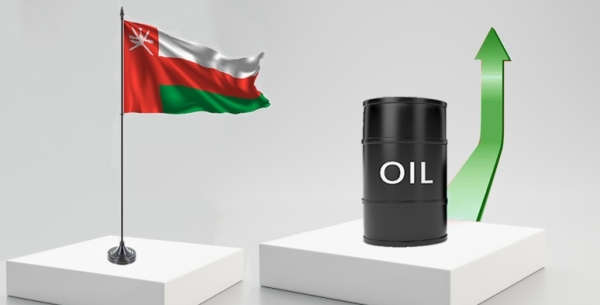
Petroleum Development Oman (PDO) - which produces around 89% of the Sultanate’s crude and oil condensates - and the other oil companies are moving ahead with their plans and efforts to increase oil production capacity and offset the relative decline in productivity the country has been witnessing since 2002. In 2005 average daily production totalled 774, 800 barrels, including 66,300 barrels of oil condensates. Production has increased modestly since Occidental began producing from the Mukhaiznah field in September 2005.
Around 718,100 barrels of oil per day were exported in 2005. Most of it (32.2%) went to China, while the remainder was exported to Thailand (16.8%), Japan (16.4%), South Korea (15%) and several other countries. The Oman Oil Refinery Company received around 86,600 barrels per day to be refined for local consumption, while the surplus was exported.
The Sultanate has crude oil and oil condensate reserves totalling over 4,803 million barrels, with PDO’s reserves accounting for over 92% of this figure. In 2005 four prospecting agreements were signed: with India’s Reliance Industries in Concession Area 18 in the Gulf of Oman, with the Irish Company Circle Oil in Concession Area 49 in the Governorate of Dhofar and the offshore Concession Area 52 in the sea between Sawqarah Bay and the Omani-Yemeni marine territorial border, and with the Swedish company Gott Oil and the Danish company Odin Energy in Concession Area 15 in the Dhahirah Region. These companies will carry out a series of exploration programmes over a three-year period.
During 2005 14 companies carried out prospecting operations in 22 concession areas. Some 18 exploratory wells were drilled and a number of geological and geophysical surveys carried out. As a result of these operations PDO was able to add 23.08 million barrels of crude to the general reserves, while Occidental succeeded in adding around 6.15 million barrels to the reserves.
An agreement has been signed with Occidental Petroleum and Liwa Energy to invest over US$2 billion in developing the Mukhaiznah field. Work has also continued on the US$1,300 million Sohar Refinery, which went into production in August 2006 with a productive capacity of 116,400 barrels per day. PDO and Occidental both have ongoing prospecting programmes. The West Asia Oil and Gas Exhibition and Conference, which took place in Muscat in April 2006, was attended by 150 companies from all over the world. On 16th April 2006 PDO launched the “Oil and Gas Dictionary” - the first specialist dictionary of its kind - which includes around 1,500 terms and expressions used in the oil and gas industries. The launch coincided with the “Muscat -Arab Culture Capital 2006” activities.

The Gas sectors:

The natural gas sector grew by around 21.6% a year during the Sixth Five-year Plan (2001- 2005), considerably higher than the projected growth of 16.6%. Natural gas revenues in the 2006 budget amounted to RO394 million - some 44.5% higher than the 2005 budget gas revenues, which totalled RO 273 million. In 2005 gas contributed 9% to the budget revenues, while in 2006 they account for 11%.
The Sultanate’s liquefied natural gas (LNG) production has increased significantly - especially since the third LNG train in Qalhat went into actual production with an annual productive capacity of 3.5 million tonnes, boosting the country’s natural gas production to 10.1 million tonnes a year. The natural gas sector’s contribution to GDP is expected to increase to around 9.2% by 2010. Its added value is also set to rise, particularly with the addition of the gas tankers “Ibri” and “Ibra” to the Oman Shipping Company’s fleet in June 2006; these new vessels will transport shipments of Omani gas to customers in Asia, Europe and the United States.
In 2005 the Sultanate produced around 917,746 million cubic feet of natural gas, comprising 270,562 million cubic feet of associated gas and 647,184 million cubic feet of non-associated gas. Average daily production was about 2,514.4 million cubic feet - a rise of 7.61% compared with the 2004 figure. LNG exports in 2005 totalled around 6.98 million metric tonnes. A further 182,000 metric tonnes of gas liquids was exported to the United Arab Emirates (UAE), while 40,910 million cubic feet of natural gas was exported to the UAE through the government gas line system, which is managed by the Oman Gas Company.
Last year some 917,404 million cubic feet of natural gas was either used locally in power stations, industrial estates, industrial projects and the oil fields, or exported.
 In 2005 the third natural gas train, operated by Qalhat LNG, went into production with an annual output capacity of 3.5 million tonnes. This project, which cost around US$645 million to implement, exported its first shipment to Spain in December 2005. The US$150 million gas treatment station at Seih Nihayda field opened on 19/12/2005, raising daily output capacity to over 80 million cubic feet; this will help meet the growing demand for natural gas in the major industrial projects that are being set up, particularly the projects on the Sohar Industrial Estate. There are also plans to expand prospecting and production operations.
Output is set to receive an additional boost when a Thai company – PTTEP - becomes involved in gas production in Oman in 2006. The Sultanate currently has proven gas reserves in excess of 24 trillion cubic feet, in addition to a further 33.8 trillion cubic feet of expected reserves.


Commerce:- Overview Finance & Banks Oil & Gas Trade & Industry Mineral Resources Agriculture & livestock Water Resources

This site is designed and maintained by Oman Electronic Network.
Copyright © 2002 Ministry of Information. All Rights Reserved.
Copyright of all photographs belongs to the Ministry of Information from whom permission must
be sought for use in any other format, i.e. whether this be in a printed or electronic form, or in a retrieval system